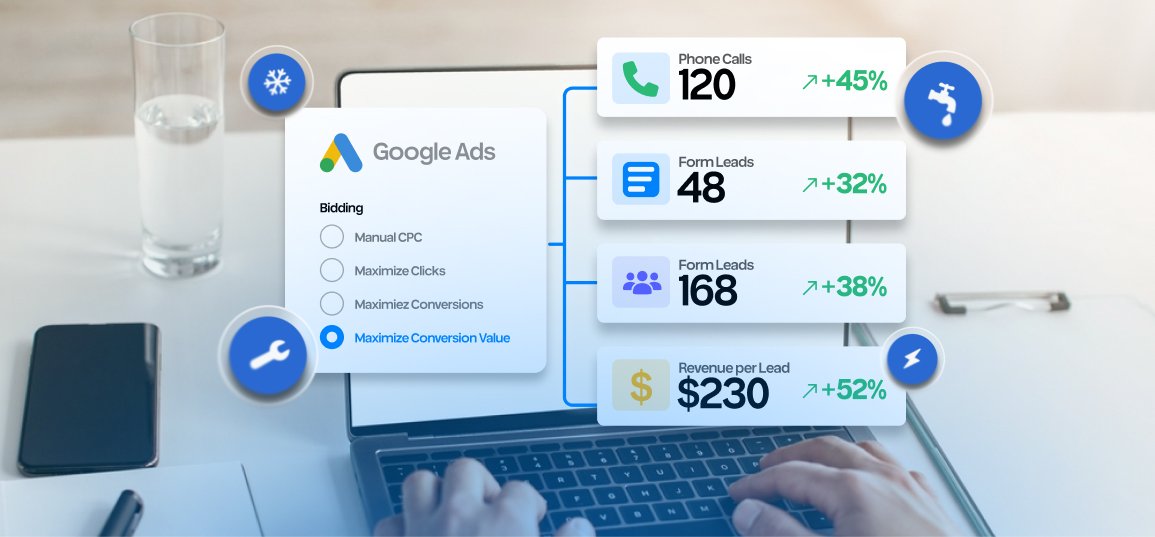












Law firm Google Ads can use Smart Bidding with low conversion volume, but the strategy becomes fragile when the account feeds the system only a handful of inconsistent events. A personal injury firm that signs three cases a month has a different data problem from a consumer service business that records hundreds of purchases.
The fix is not to manufacture more conversions by counting every phone call or page view. It is to consolidate useful learning, keep conversion definitions clean, choose a bid strategy that matches the available signal, and evaluate results over a full legal intake cycle.
Smart Bidding uses query-level data across an account and can model low-volume keywords using broader signals. Even so, Google notes that some strategies benefit from minimum historical conversion volume. Sparse data makes targets harder to calibrate and results harder to judge, especially when one signed matter is worth much more than another.

Why Legal PPC Creates a Data Scarcity Problem
Legal clicks are often expensive, searches can be ambiguous, and the most valuable outcome may happen days or weeks after the initial inquiry. A campaign might record calls quickly but learn the real case fit only after intake, a conflict check, attorney review, and a signed agreement.
Low volume also increases volatility. If a campaign gets eight leads in one month, two poor-fit inquiries can materially change the reported conversion rate. If the account is split into six campaigns with separate budgets and targets, each campaign receives even less evidence.
The usual response is to loosen the conversion definition so the dashboard fills up. That gives the algorithm more events but a less reliable objective. A short call, a job applicant, a current client, and a qualified prospective case are not interchangeable outcomes.
Start With a Conversion Hierarchy
Create separate actions for raw inquiry, reached lead, qualified consultation, retained client, and any approved value measure. Use the earliest dependable action that occurs often enough to support bidding, then observe deeper outcomes to confirm that the campaign is not trading quality for volume.
For some firms, the biddable action may be a qualified consultation rather than a signed case because signed cases are too sparse or delayed. That choice is acceptable when the qualification criteria are consistent and strongly connected to retention. The signed matter remains the business truth used to evaluate return.
Do not mix unrelated practice areas into one value assumption. A criminal defense consultation, an employment matter, and a high-severity injury case can have different intake rates, fee structures, and time to resolution. Conversion values should reflect an approved economic model, not a convenient round number.
Consolidate Learning Before You Expand Targeting
Fragmentation is expensive when data is scarce. Too many campaigns, duplicate keywords, overlapping locations, and separate targets can leave each part of the account without enough feedback. Consolidate where practice area, geography, economics, and intake process are genuinely comparable.
A portfolio bid strategy can share a target across multiple campaigns, while account-level query data already helps Smart Bidding model low-volume terms. The principle is to create fewer meaningful learning pools, not one giant campaign with every legal service.
Consolidation should follow the business model. Group services that use similar intake questions, case values, and geographic coverage. Keep distinct services separate when different eligibility rules or economics would cause the system to favor cheap but less valuable matters.
White Shark Media’s legal case study illustrates the operating principle. The firm began with campaigns competing against each other, wasted spend, and insufficient clean data. After simplifying the account, removing irrelevant traffic, improving the landing page, and optimizing Local Services Ads, leads grew from roughly 12 per month to 50–60 or more while reported cost per case fell from about $700 to about $170 over six months. Those results belong to that account and are not a guarantee, but they show why cleaner structure and stronger signals can matter more than adding campaigns.

Choose a Bid Strategy That Matches the Evidence
Maximize Clicks can be useful for a tightly controlled launch when conversion tracking is not ready, but it should not become the permanent answer for expensive legal terms. Its objective is traffic, not qualified consultations.
Maximize Conversions can help a campaign explore when the primary conversion is reliable and the budget is intentional. Without a target, it may spend the available budget in pursuit of the most conversions it predicts, so lead quality must be monitored closely.
Target CPA becomes more defensible when the account has a stable definition of conversion, enough recent volume to evaluate a pattern, and a target grounded in case economics. Setting an aggressive target below what the market has demonstrated can restrict traffic or push the system toward easier, lower-quality actions.
Value-based bidding is attractive when the firm can assign consistent values to qualified consultations or retained matters. It requires disciplined data governance. If values are delayed, missing, or subjective, the model may be more precise in appearance than in reality.
Manual bidding can still be a temporary control for extremely sparse, high-cost campaigns, but it sacrifices auction-time signal use and demands careful management. The decision should be based on data quality and operating capacity, not nostalgia for a familiar control panel.
A Staged Plan for Low-Volume Legal Accounts
Stage one is measurement. Confirm call tracking, form routing, duplicate handling, intake statuses, and the link between ad source and retained matter. Exclude internal tests, current-client calls, careers traffic, and other non-prospect activity from primary bidding goals.
Stage two is structure. Remove avoidable overlap, align campaigns to practice-area economics, and make landing pages specific enough to qualify the searcher. Preserve a separate view of brand traffic so it does not hide the cost of acquiring new demand.
Stage three is signal selection. Pick one primary action that is frequent, consistent, and meaningfully connected to case value. Keep deeper outcomes as secondary or imported actions until the firm has validated the process and privacy requirements.
Stage four is bidding. Begin with a strategy that can operate on the available evidence, set a bounded test budget, and wait through the conversion delay before judging it. Change one major lever at a time.
Stage five is escalation. Move toward target-based or value-based bidding only when the account has enough clean history to set a credible target and the intake team can return outcomes reliably. The precise conversion count varies by strategy and campaign type; use Google’s current guidance and the account’s variance rather than a universal threshold copied from a forum.
How to Evaluate a Low-Volume Test
Use rolling windows long enough to contain several conversion cycles. Compare qualified consultations, retained matters, estimated case value, and cost per signed case. Add confidence ranges or at least note when one outlier case is driving the result.
Segment by query theme, geography, device, time, and landing page, but do not overreact to tiny samples. The purpose of segmentation is to form a testable hypothesis, not to create dozens of new campaigns from a single bad lead.
Watch operational variables. A campaign can appear worse when calls go unanswered, intake criteria change, or attorneys stop accepting a case type. Record those changes beside media performance so the bidding strategy is not blamed for a business decision it could not observe.
The Bottom Line
Low conversion volume does not make Smart Bidding impossible for law firms. It makes signal quality, consolidation, and patience more important. The account should teach the system what a useful legal opportunity looks like without inflating volume with weak actions.
The most reliable path is a staged one: fix measurement, simplify structure, choose a qualified outcome, run a bounded test, and graduate to tighter targets only when the evidence supports them.
Frequently Asked Questions
How many conversions does Smart Bidding need?
Google’s recommendations vary by campaign type and strategy. Smart Bidding can use broader query-level data, but target-based strategies are easier to calibrate and evaluate when recent conversion volume is stable and the conversion action is reliable.
Should a law firm optimize for calls or signed cases?
Use the deepest outcome that is consistent and frequent enough to support decisions. Many firms bid toward qualified consultations while using signed cases and case value as the final business evaluation.
Does consolidating campaigns always improve performance?
No. Consolidation helps when campaigns share economics, geography, and intake rules. Combining materially different practice areas can cause automation to favor cheaper but less valuable matters.
Is Manual CPC better for low-volume legal campaigns?
It can provide temporary control, but it does not use the same auction-time conversion signals as Smart Bidding. Treat it as one option in a staged test, not a universal answer.