











When a home service company gets calls but not enough booked jobs, the instinct is often to blame the ads. Sometimes the traffic is wrong. Just as often, the revenue leak begins after the phone rings.
A homeowner with a leaking pipe, failed air conditioner, or damaged roof rarely waits patiently through voicemail. They call the next company. The practical fix is to manage paid acquisition and call handling as one system: generate the right call, answer or acknowledge it quickly, qualify it consistently, book the next step, and send the outcome back to the ad platform.
The Difference Between a Call and a Revenue Opportunity
A call conversion in Google Ads only proves that a call met the tracking rule. It does not prove the caller was in the service area, needed a profitable service, reached a person, scheduled an appointment, or became a customer. That is why call volume can rise while the schedule stays uneven.
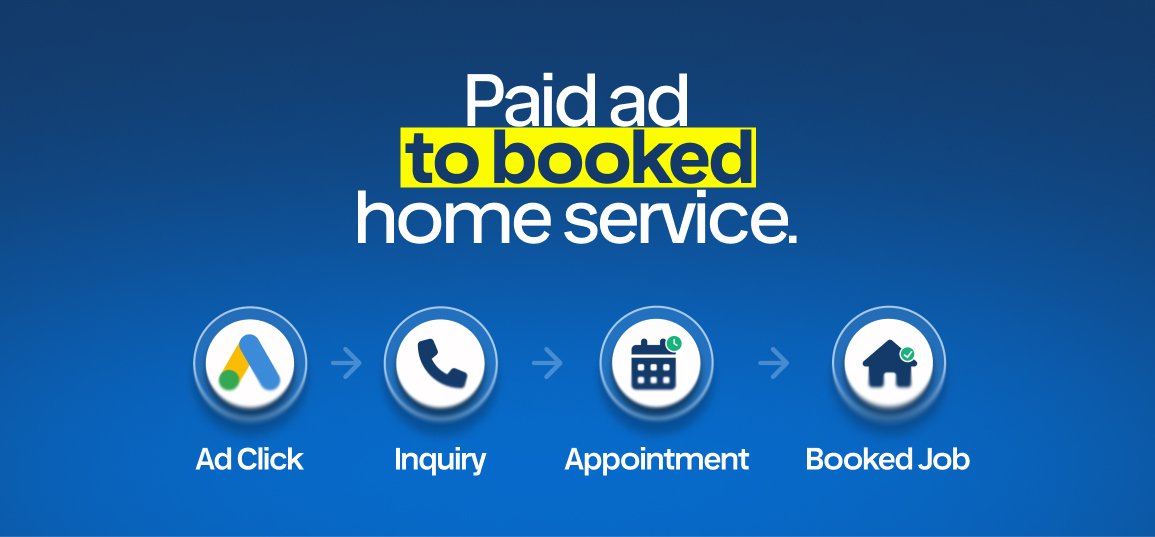
Define the stages clearly. An inbound call is an attempt to connect. An answered call reaches a person or approved answering workflow. A qualified call fits the service, location, urgency, and customer criteria. A booked job or appointment has a committed next step. Revenue is completed work. Each stage answers a different management question.

Find the Leak Before Buying More Leads
Start with a simple call-to-job scorecard. For each campaign or lead source, record total calls, answered calls, qualified calls, booked appointments, completed jobs, and revenue when available. Then calculate answer rate, qualification rate, booking rate, and cost per booked job.
Listen to or classify a representative sample of calls, following applicable consent and privacy rules. Label wrong numbers, existing-customer support, job seekers, vendors, out-of-area callers, price shoppers, unserviceable requests, and true opportunities. This separates a marketing-quality problem from an operations problem.
Time patterns usually reveal more. Compare business hours with evenings and weekends. Compare peak weather days with normal demand. Break out campaigns for emergency and planned services. A company may have strong ad targeting but weak coverage exactly when high-intent calls arrive.
Build a Call-Capture Standard
A reliable system does not depend on one office employee being free. Create a routing order for each time block: primary line, backup person or team, approved answering service, and immediate acknowledgment when no live answer is possible. The customer should know the request was received and what happens next.
For urgent services, route by real dispatch capacity. Advertising “24/7” while sending after-hours calls to an unattended mailbox creates expensive disappointment. If the team cannot serve a time window or geography, reduce exposure there until operations catch up.
Use a short intake standard so every call captures the information needed to act: name, callback number, service address or ZIP code, problem type, urgency, property context, and preferred appointment window. The goal is not an interrogation. It is a fast handoff that prevents the customer from repeating the story.
Recover Missed Calls Without Sounding Automated
A missed-call text can preserve the conversation when it is immediate, specific, and honest. Confirm the company name, acknowledge that the team missed the call, ask for the minimum useful detail, and state when a person will respond. Do not imply that an appointment is confirmed until it is.
Create a callback service-level target by lead type. Emergency requests need the shortest response. Estimate requests may tolerate a little more time, but should still receive prompt acknowledgment. Assign ownership so “someone will call back” becomes a named task with a deadline.
When the team reconnects, continue from the captured context. Speed matters, but continuity builds trust.
Feed Booked-Job Data Back Into Marketing
Marketing should not optimize toward every ring equally. Connect the call-tracking platform, CRM, field-service software, or a disciplined offline import so campaigns can learn which inquiries become qualified opportunities and jobs. Use outcome labels consistently and audit them before changing bids.
This feedback improves budget decisions. A keyword with fewer calls may produce more profitable work. A campaign with a low cost per call may generate mostly low-value repairs outside the preferred area. Cost per booked job and revenue by source tell a more useful story than call count alone.
A 30-Day Improvement Plan
- Week 1: Establish the baseline by source, hour, location, service, and outcome.
- Week 2: Repair routing, backup coverage, missed-call acknowledgment, and intake fields.
- Week 3: Train the team on qualification and booking; review a call sample together.
- Week 4: Import qualified and booked outcomes, then move budget toward profitable demand.
Do not wait for perfect software. A consistent spreadsheet and weekly review can expose the first leak. Automate once the definitions and ownership are stable.
Turn the Phone Into a Growth System
Home service growth is not just an ad problem or a call-center problem. It is a connected operating system. The business wins when the right homeowner can find the company, reach it, receive a useful response, and book without friction.
White Shark Media focuses on calls, booked jobs, and revenue visibility for local businesses. Use the free call forecast and growth diagnostic to estimate the opportunity, then audit the path from click to call to completed work before raising budget.
Frequently Asked Questions
Why do home service leads call but not book?
Common causes include missed calls, slow callbacks, inconsistent qualification, limited appointment availability, weak call handling, wrong service-area traffic, and pricing or trust objections.
What is call-to-booking rate?
Call-to-booking rate is the percentage of relevant inbound calls that produce a scheduled appointment or job. Define the denominator consistently, because including spam and support calls can distort the result.
Should a home service company use missed-call text back?
It can help when the message is immediate, transparent, concise, and connected to a real callback workflow. It should not promise availability that the company cannot deliver.
What should Google Ads optimize for in home services?
Whenever possible, optimize using qualified leads, booked appointments, completed jobs, or value-based outcomes rather than treating every call or form as equal.